SixtyFive — Commodore 65 Emulator
A downloadable tool for Windows and Linux
English
SixtyFive — the Commodore 65 emulator
The Commodore 65 was meant to succeed the C64: a 3.5 MHz 4510 CPU, the VIC-III with bitplanes and 4096 colours, the DMAgic, two SIDs and a built-in 3.5” drive. It never reached the shops, and only a few prototypes survive. SixtyFive brings it back to life on your PC. Every behaviour that was in doubt has been checked with test programs run on a real C65 rev 2B.
What you get
SixtyFive 2.1.6 for Windows and Linux: the emulator.
SixtyFive Studio 1.2.2, free with your purchase: an environment for writing games for the C65 in 4510 assembly (with windows on Windows, from the command line on Linux).
OpenROM 65 1.1.5: a free, original ROM, also available as a separate free download.
Manuals in English, Italian, Spanish and German: also a free download, so you can read them before buying.
Updates are free for everyone who has bought SixtyFive.
The emulator
4510 CPU with the real timing of all 256 opcodes at 3.5 and 1 MHz, measured on the C65; VIC-III with bitplanes, 80 columns and 4096 colours; DMAgic; F011 floppy controller; CIAs; RAM expansion up to 8 MB.
Two 8580 SIDs, at $D400 and $D420. The combined waveforms come from tables measured point by point on the two chips of a real C65.
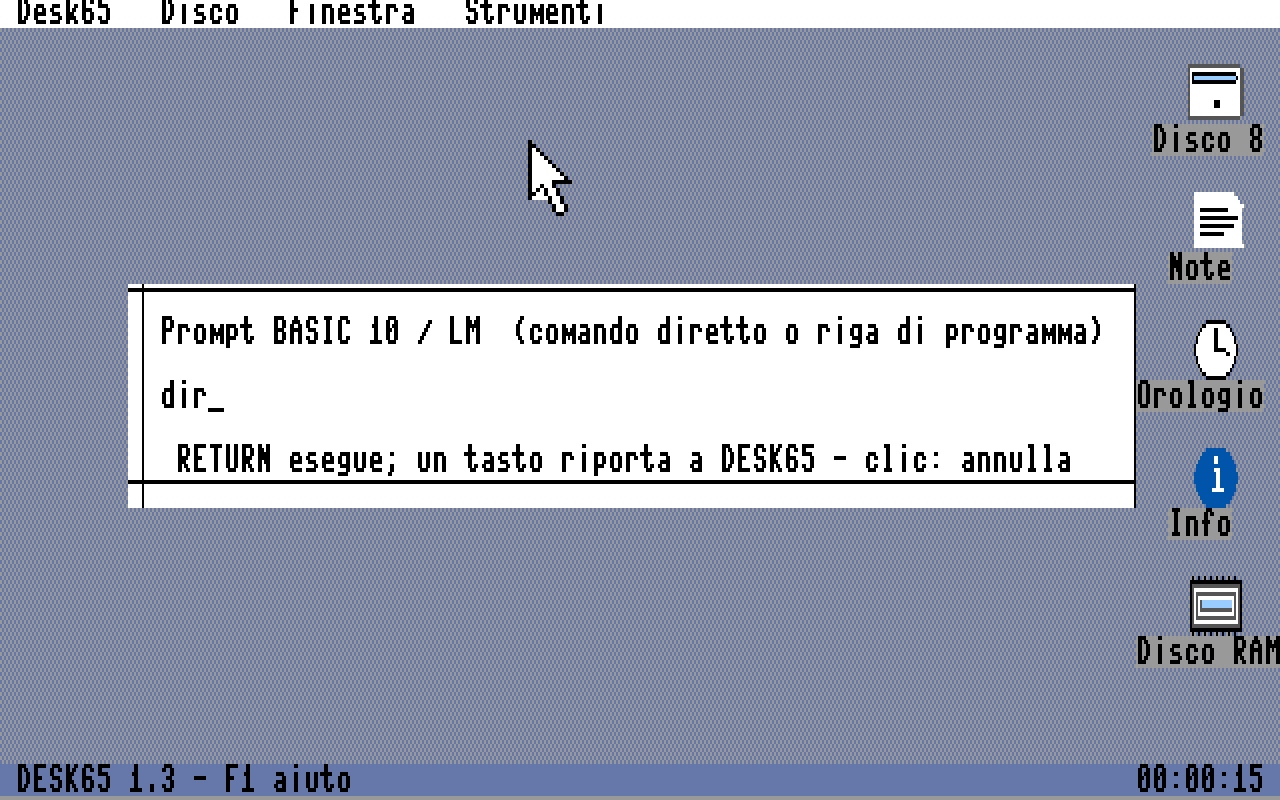
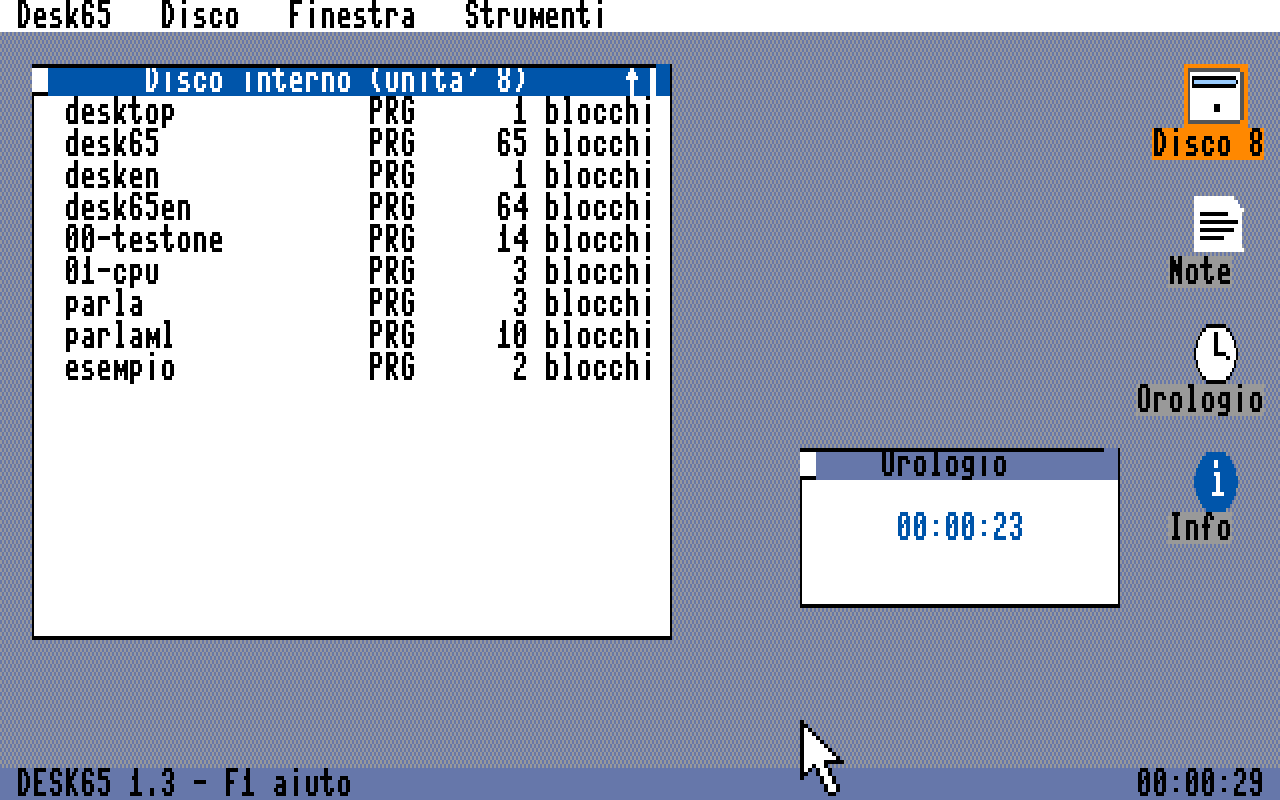
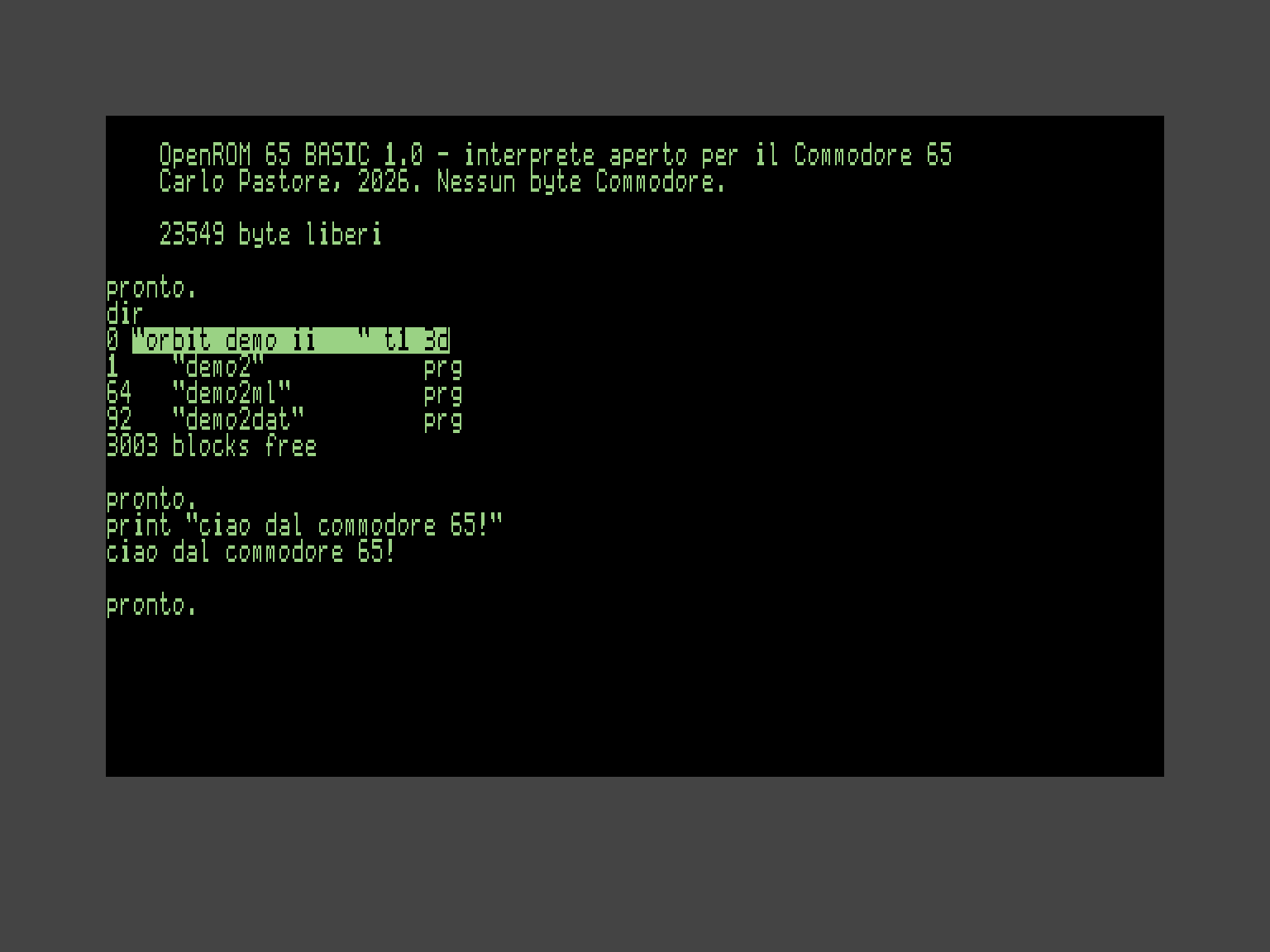
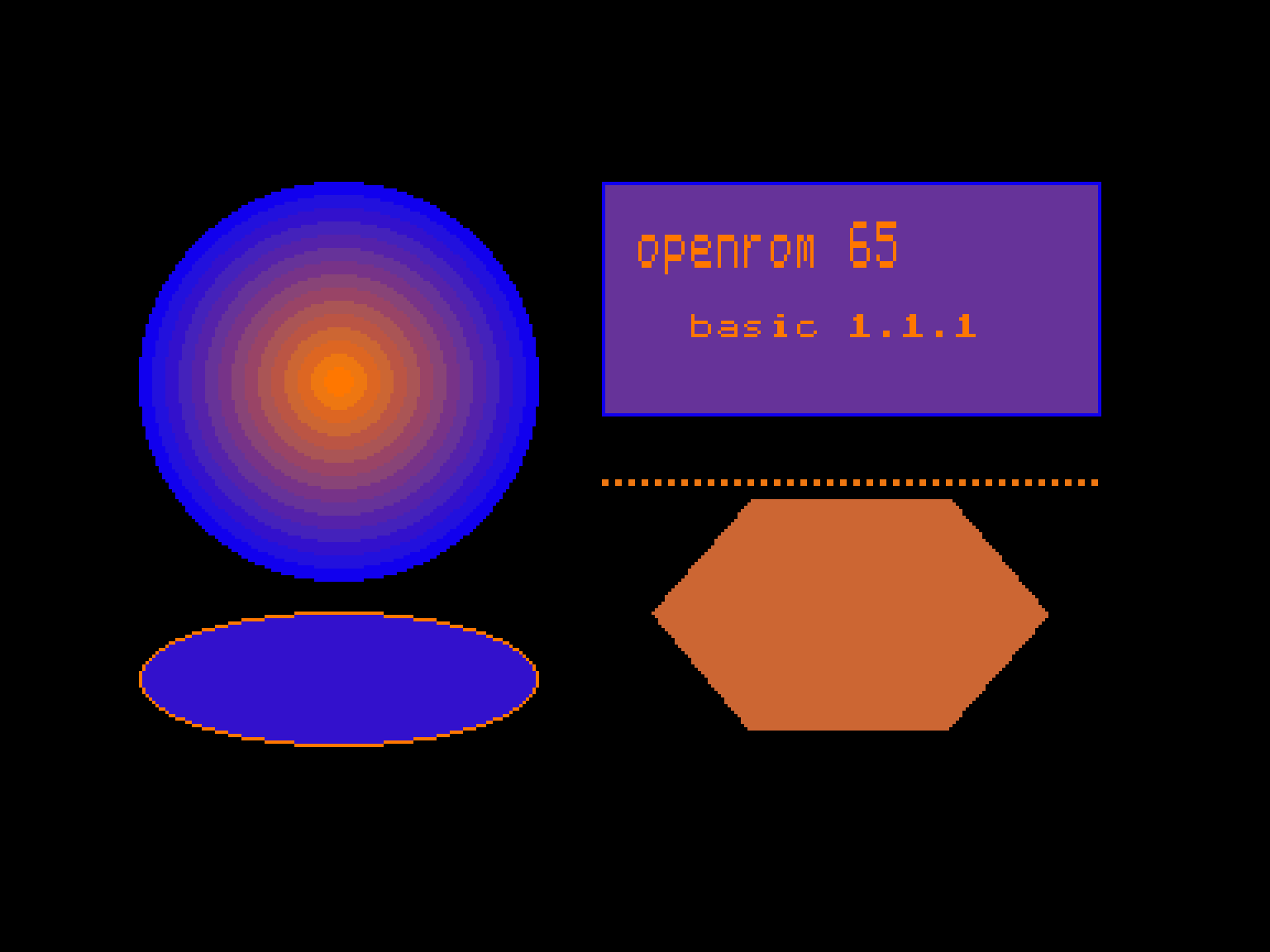
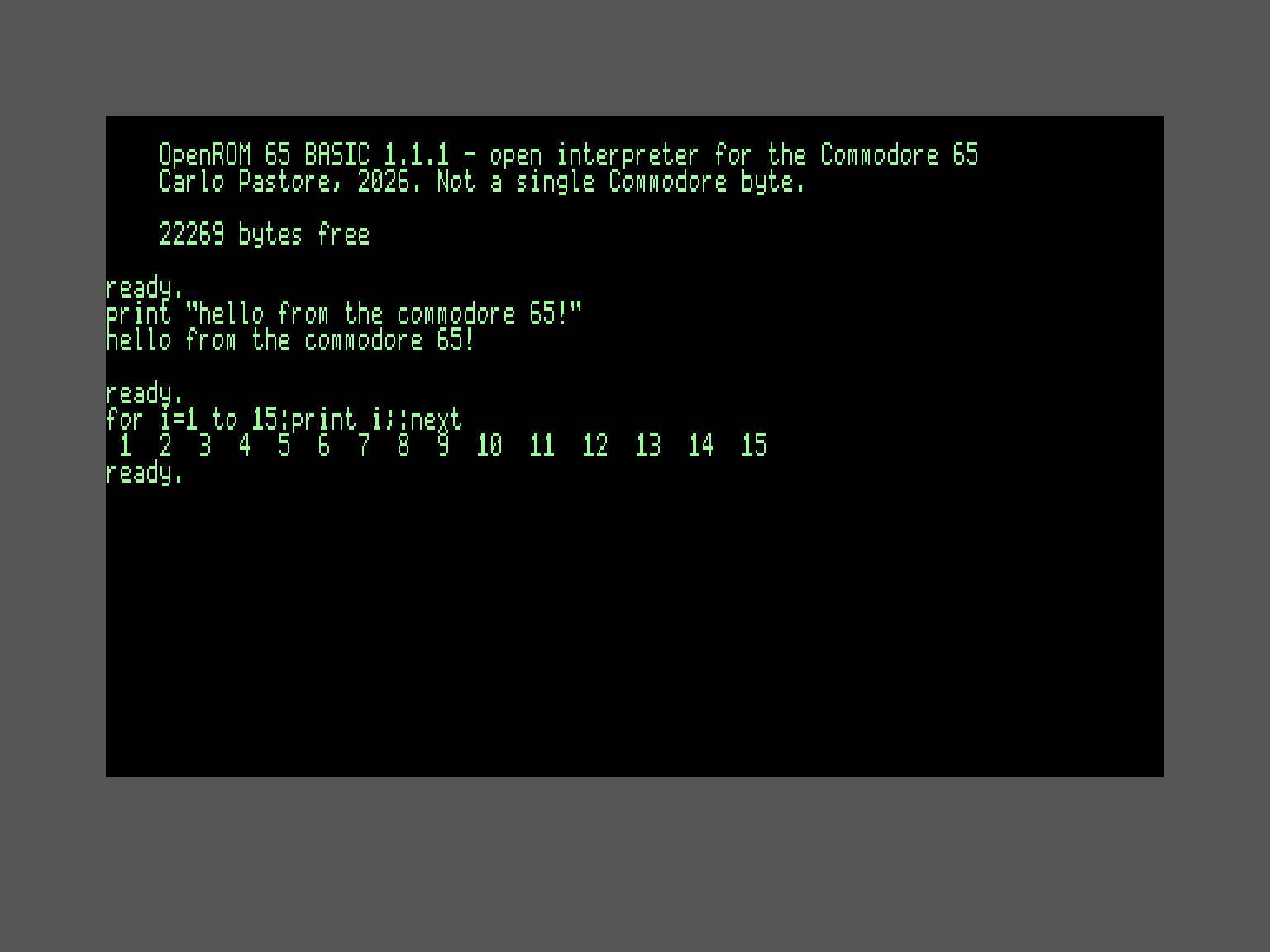
OpenROM 65 1.1.5 built in, in four languages. It has BASIC 65 with graphics, sound, sprites and SAY speech, a full DOS and the DESK65 windowing system, and contains no Commodore code. The original Commodore ROMs are not included: if you own them, you can load them from the ROM menu. C64 mode works with the Commodore C65 ROM.
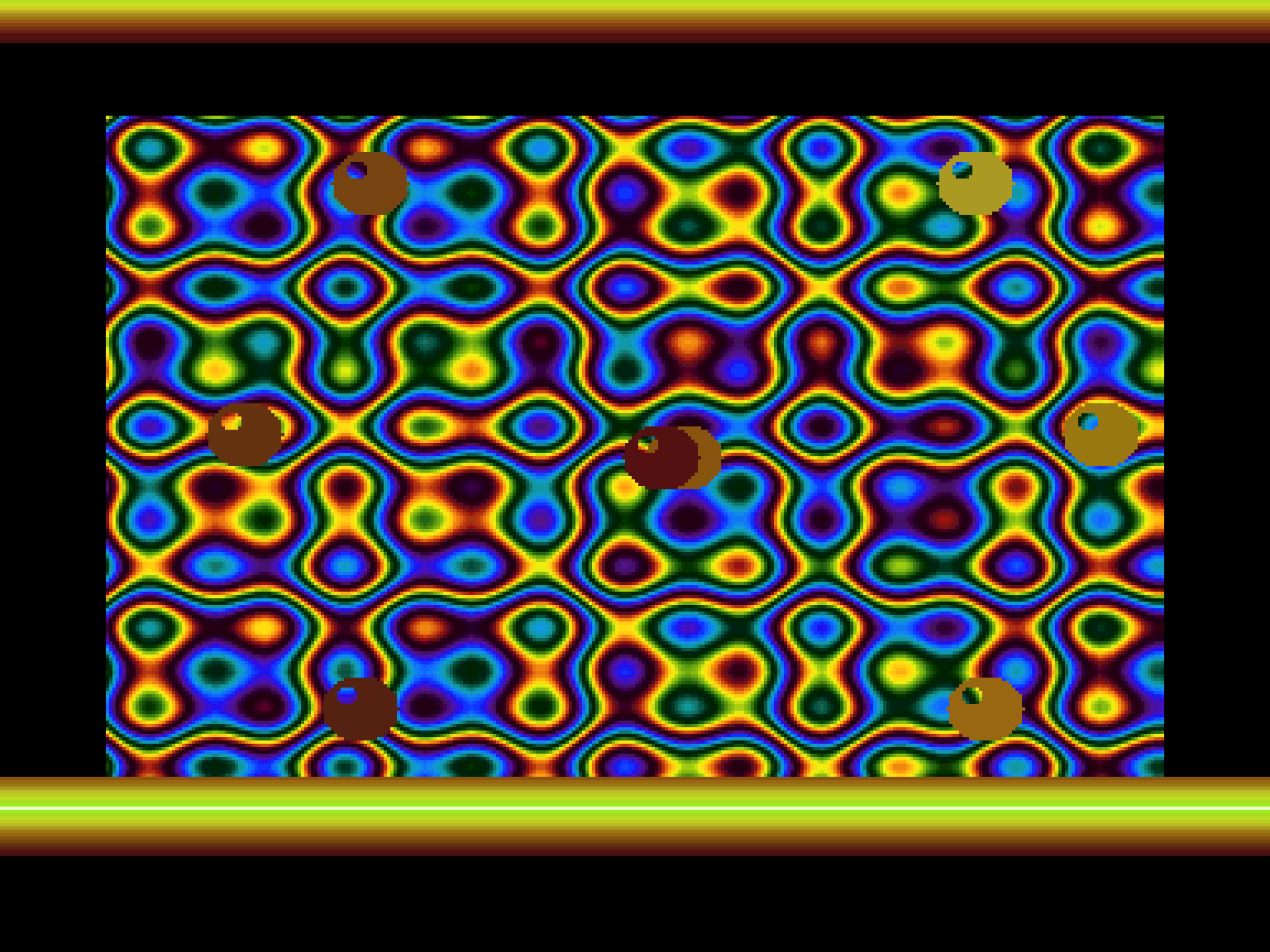
Commodore 1084S monitor emulation (scanlines, slot mask, glow, curved tube), switched on automatically when a game is on screen, plus other CRT effects.
The floppy drive sound, recorded from a real C65.
.d81 images in two drives (also inside .zip and .lha archives), a virtual partitioned hard disk, a virtual SD2IEC on the serial bus, save states.
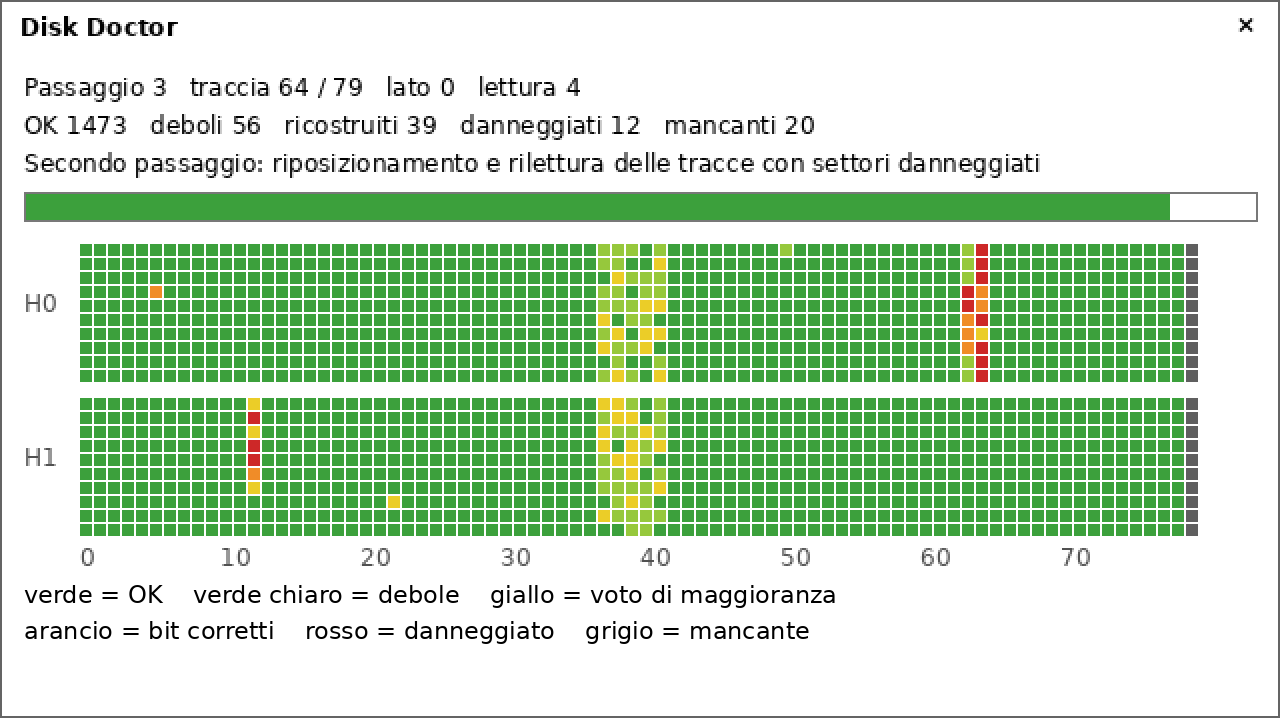
Real 3.5” floppies through WAFFLE/DrawBridge: read, write, format and a Disk Doctor that recovers damaged disks. Disks written by SixtyFive load on the real C65.
1351 mouse and Amiga mouse, joystick on the numeric keypad or a USB gamepad.
Monitor/debugger, assembler, character and sprite editor, built-in BASIC 10 reference (Windows version).
Paste a BASIC listing with Ctrl+V, lossless PNG screenshots, AVI recording, full screen. Interface in English, Italian, Spanish and German.
On the included disks: the DESK65 windowing system, the SIXTYFIVE and ORBIT demos, PARLA (Italian speech on the two SIDs) and the hardware test programs.
Manual of 103 pages in four languages, with a complete guide to BASIC 10 and the OpenROM 65 specifications.
SixtyFive Studio 1.2.2
Write games for the C65, real or emulated:
4510 assembler and editor.
The lib65 game library: sprites, music on both SIDs, sound effects and sampled voices.
Image converters (photos on bitplanes up to 64 colours) and a WAV sample converter.
A level editor that also imports Tiled maps.
Files loaded from disk while the game runs.
Press F5 to try the game in SixtyFive, or send it to the real C65 on an SD2IEC or a real floppy with the WAFFLE. It comes with three templates to start from: a platform game, a photo with a voice, and a minimal project. Menus in four languages; the Studio manual is in Italian.
From the real C65
The MEGATEST 65 measured all 256 opcodes, the memory map, the VIC-III, the SIDs, the DMAgic, the CIAs and the floppy controller. It found, among other things, that the second SID is at $D420, not $D440. The CHIUDITEST 65 then read the 8580 combined waveforms point by point and explained the floppy data port. An automatic comparison checks the emulator against 98 measurements from the real machine.
Requirements:
Windows 10/11, 64-bit.
Linux x86-64 with SDL2. The Linux version does not yet have the debugger, the editors, real floppies or AVI recording.
No installation: just unzip and run. The program is not digitally signed: if Windows shows “Windows protected your PC”, choose More info → Run anyway.
Credits: Carlo Pastore (author) · Fabrizio Picci, aka Faber Pixel (outstanding beta tester)
SixtyFive is not affiliated with Commodore or with the owners of the rights to its ROMs. Commodore is a trademark of its respective owners.
Italiano
SixtyFive — l’emulatore del Commodore 65
Il Commodore 65 doveva essere l’erede del C64: un 4510 a 3,5 MHz, il VIC-III con bitplane e 4096 colori, il DMAgic, due SID e il drive da 3,5” interno. Non è mai arrivato nei negozi e ne restano pochi prototipi. SixtyFive lo riporta in vita sul tuo PC. Ogni comportamento incerto è stato verificato con programmi di prova eseguiti su un C65 rev 2B vero.
Che cosa c’è
SixtyFive 2.1.6 per Windows e Linux: l’emulatore.
SixtyFive Studio 1.2.2, gratuito per chi compra: un ambiente per scrivere giochi per il C65 in assembly 4510 (con le finestre su Windows, dalla riga di comando su Linux).
OpenROM 65 1.1.5: una ROM libera e originale, scaricabile gratis anche da sola.
Manuali in italiano, inglese, spagnolo e tedesco: anche questi gratis, per leggerli prima di comprare.
Gli aggiornamenti sono gratuiti per chi ha già comprato SixtyFive.
L’emulatore
CPU 4510 con i tempi veri di tutti i 256 opcode a 3,5 e 1 MHz, misurati sul C65; VIC-III con bitplane, 80 colonne e 4096 colori; DMAgic; controller del floppy F011; CIA; espansione di memoria fino a 8 MB.
Due SID 8580, a $D400 e $D420. Le forme d’onda combinate vengono da tabelle misurate punto per punto sui due chip di un C65 vero.
OpenROM 65 1.1.5 incorporata, in quattro lingue. Ha il BASIC 65 con grafica, suono, sprite e la voce di SAY, il DOS completo e il sistema a finestre DESK65, e non contiene codice Commodore. Le ROM Commodore originali non sono incluse: chi le possiede le carica dal menu ROM. Il modo C64 funziona con la ROM Commodore del C65.
Emulazione del monitor Commodore 1084S (righe raster, maschera a fessure, alone, tubo curvo), che si accende da sola quando sullo schermo c’è un gioco, e altri effetti CRT.
Il suono del drive, registrato da un C65 vero.
Immagini .d81 nei due drive (anche dentro archivi .zip e .lha), hard disk virtuale a partizioni, SD2IEC virtuale sul bus seriale, salvataggio dello stato.
Dischetti veri da 3,5” con WAFFLE/DrawBridge: lettura, scrittura, formattazione e Disk Doctor per recuperare i dischi danneggiati. I dischetti scritti da SixtyFive si caricano sul C65 vero.
Mouse 1351 e mouse Amiga, joystick dal tastierino numerico o da un gamepad USB.
Monitor/debugger, assembler, editor di caratteri e sprite, riferimento del BASIC 10 integrato (versione per Windows).
Incolla un listato BASIC con Ctrl+V, schermate PNG senza perdite, registrazione AVI, schermo intero. Interfaccia in italiano, inglese, spagnolo e tedesco.
Sui dischi inclusi: il sistema a finestre DESK65, le demo SIXTYFIVE e ORBIT, PARLA (la voce in italiano con i due SID) e i programmi di prova dell’hardware.
Manuale di 103 pagine in quattro lingue, con la guida completa del BASIC 10 e le specifiche della OpenROM 65.
SixtyFive Studio 1.2.2
Per scrivere giochi per il C65, vero o emulato:
Assembler 4510 ed editor.
La libreria di gioco lib65: sprite, musica sui due SID, effetti sonori e voci campionate.
Convertitori di immagini (foto sui bitplane fino a 64 colori) e di campioni WAV.
Un editor di livelli, che importa anche le mappe di Tiled.
Caricamento di file dal disco durante il gioco.
Con F5 il gioco si prova in SixtyFive, oppure si manda al C65 vero con la SD2IEC o su un dischetto vero con il WAFFLE. Ci sono tre modelli da cui partire: un platform, una foto con la voce e un progetto minimo. Menu in quattro lingue; il manuale dello Studio è in italiano.
Dal C65 vero
Il MEGATEST 65 ha misurato tutti i 256 opcode, la mappa della memoria, il VIC-III, i SID, il DMAgic, le CIA e il controller del floppy. Fra l’altro ha scoperto che il secondo SID è a $D420, non a $D440. Il CHIUDITEST 65 ha poi letto punto per punto le onde combinate dell’8580 e spiegato la porta dati del floppy. Un confronto automatico verifica l’emulatore su 98 misure della macchina vera.
Requisiti:
Windows 10/11 a 64 bit.
Linux x86-64 con SDL2. La versione per Linux non ha ancora il debugger, gli editor, i dischetti veri e la registrazione AVI.
Nessuna installazione: si decomprime e si avvia. Il programma non è firmato digitalmente: se Windows mostra “PC protetto da Windows”, scegli Ulteriori informazioni → Esegui comunque.
Crediti: Carlo Pastore (autore) · Fabrizio Picci, alias Faber Pixel (beta tester d’eccellenza)
SixtyFive non è affiliato a Commodore né ai titolari dei diritti delle sue ROM. Commodore è un marchio dei rispettivi proprietari.
Español
SixtyFive — el emulador del Commodore 65
El Commodore 65 iba a ser el sucesor del C64: una CPU 4510 a 3,5 MHz, el VIC-III con bitplanes y 4096 colores, el DMAgic, dos SID y una unidad de 3,5” integrada. Nunca llegó a las tiendas y solo quedan unos pocos prototipos. SixtyFive lo devuelve a la vida en tu PC. Cada comportamiento dudoso se ha comprobado con programas de prueba ejecutados en un C65 rev 2B real.
Qué incluye
SixtyFive 2.1.6 para Windows y Linux: el emulador.
SixtyFive Studio 1.2.2, gratis con la compra: un entorno para escribir juegos para el C65 en ensamblador 4510 (con ventanas en Windows, desde la línea de comandos en Linux).
OpenROM 65 1.1.5: una ROM libre y original, que también se puede descargar gratis por separado.
Manuales en español, inglés, italiano y alemán: también gratis, para leerlos antes de comprar.
Las actualizaciones son gratuitas para quien ya ha comprado SixtyFive.
El emulador
CPU 4510 con los tiempos reales de los 256 opcodes a 3,5 y 1 MHz, medidos en el C65; VIC-III con bitplanes, 80 columnas y 4096 colores; DMAgic; controlador de disquete F011; CIA; ampliación de memoria hasta 8 MB.
Dos SID 8580, en $D400 y $D420. Las formas de onda combinadas salen de tablas medidas punto por punto en los dos chips de un C65 real.
OpenROM 65 1.1.5 integrada, en cuatro idiomas. Tiene BASIC 65 con gráficos, sonido, sprites y la voz de SAY, un DOS completo y el sistema de ventanas DESK65, y no contiene código de Commodore. Las ROM originales de Commodore no se incluyen: quien las tenga puede cargarlas desde el menú ROM. El modo C64 funciona con la ROM de Commodore del C65.
Emulación del monitor Commodore 1084S (líneas de barrido, máscara de ranuras, halo, tubo curvo), que se activa sola cuando hay un juego en pantalla, y otros efectos CRT.
El sonido de la disquetera, grabado de un C65 real.
Imágenes .d81 en dos unidades (también dentro de archivos .zip y .lha), disco duro virtual con particiones, SD2IEC virtual en el bus serie, guardado del estado.
Disquetes reales de 3,5” con WAFFLE/DrawBridge: lectura, escritura, formateo y un Disk Doctor que recupera discos dañados. Los disquetes escritos por SixtyFive cargan en el C65 real.
Ratón 1351 y ratón Amiga, joystick en el teclado numérico o un mando USB.
Monitor/depurador, ensamblador, editor de caracteres y sprites, referencia de BASIC 10 integrada (versión para Windows).
Pegar un listado BASIC con Ctrl+V, capturas PNG sin pérdidas, grabación AVI, pantalla completa. Interfaz en español, inglés, italiano y alemán.
En los discos incluidos: el sistema de ventanas DESK65, las demos SIXTYFIVE y ORBIT, PARLA (voz en italiano con los dos SID) y los programas de prueba del hardware.
Manual de 103 páginas en cuatro idiomas, con la guía completa de BASIC 10 y las especificaciones de la OpenROM 65.
SixtyFive Studio 1.2.2
Para escribir juegos para el C65, real o emulado:
Ensamblador 4510 y editor.
La biblioteca de juego lib65: sprites, música en los dos SID, efectos de sonido y voces digitalizadas.
Convertidores de imágenes (fotos en bitplanes de hasta 64 colores) y de muestras WAV.
Un editor de niveles, que también importa mapas de Tiled.
Carga de archivos desde el disco mientras el juego se ejecuta.
Con F5 el juego se prueba en SixtyFive, o se envía al C65 real con la SD2IEC o en un disquete real con el WAFFLE. Incluye tres plantillas para empezar: un juego de plataformas, una foto con voz y un proyecto mínimo. Menús en cuatro idiomas; el manual del Studio está en italiano.
Desde el C65 real
El MEGATEST 65 midió los 256 opcodes, el mapa de memoria, el VIC-III, los SID, el DMAgic, las CIA y el controlador de disquete. Entre otras cosas descubrió que el segundo SID está en $D420, no en $D440. Después, el CHIUDITEST 65 leyó punto por punto las ondas combinadas del 8580 y explicó el puerto de datos del disquete. Una comparación automática verifica el emulador con 98 medidas de la máquina real.
Requisitos:
Windows 10/11 de 64 bits.
Linux x86-64 con SDL2. La versión para Linux aún no tiene el depurador, los editores, los disquetes reales ni la grabación AVI.
Sin instalación: se descomprime y se ejecuta. El programa no está firmado digitalmente: si Windows muestra “Windows protegió su PC”, elige Más información → Ejecutar de todas formas.
Créditos: Carlo Pastore (autor) · Fabrizio Picci, alias Faber Pixel (beta tester de excepción)
SixtyFive no está afiliado a Commodore ni a los titulares de los derechos de sus ROM. Commodore es una marca de sus respectivos propietarios.
Deutsch
SixtyFive — der Commodore-65-Emulator
Der Commodore 65 sollte der Nachfolger des C64 werden: eine 4510-CPU mit 3,5 MHz, der VIC-III mit Bitplanes und 4096 Farben, der DMAgic, zwei SIDs und ein eingebautes 3,5”-Laufwerk. In die Läden kam er nie, und es gibt nur wenige Prototypen. SixtyFive erweckt ihn auf deinem PC wieder zum Leben. Jedes zweifelhafte Verhalten wurde mit Testprogrammen auf einem echten C65 rev 2B geprüft.
Was du bekommst
SixtyFive 2.1.6 für Windows und Linux: der Emulator.
SixtyFive Studio 1.2.2, kostenlos beim Kauf: eine Umgebung, um Spiele für den C65 in 4510-Assembler zu schreiben (mit Fenstern unter Windows, über die Kommandozeile unter Linux).
OpenROM 65 1.1.5: ein freies, eigenständig geschriebenes ROM, auch einzeln kostenlos herunterladbar.
Handbücher auf Deutsch, Englisch, Italienisch und Spanisch: ebenfalls kostenlos, damit du sie vor dem Kauf lesen kannst.
Updates sind für alle, die SixtyFive gekauft haben, kostenlos.
Der Emulator
4510-CPU mit dem echten Timing aller 256 Opcodes bei 3,5 und 1 MHz, gemessen am C65; VIC-III mit Bitplanes, 80 Spalten und 4096 Farben; DMAgic; Diskettencontroller F011; CIAs; Speichererweiterung bis 8 MB.
Zwei SIDs 8580, an $D400 und $D420. Die kombinierten Wellenformen stammen aus Tabellen, die Punkt für Punkt an beiden Chips eines echten C65 gemessen wurden.
OpenROM 65 1.1.5 eingebaut, in vier Sprachen. Es hat BASIC 65 mit Grafik, Ton, Sprites und der Sprachausgabe SAY, ein vollständiges DOS und das Fenstersystem DESK65, und es enthält keinen Commodore-Code. Die originalen Commodore-ROMs sind nicht enthalten: Wer sie besitzt, lädt sie über das ROM-Menü. Der C64-Modus funktioniert mit dem Commodore-ROM des C65.
Emulation des Commodore-1084S-Monitors (Rasterzeilen, Schlitzmaske, Leuchten, gewölbte Röhre), der sich automatisch einschaltet, wenn ein Spiel auf dem Bildschirm ist, dazu weitere CRT-Effekte.
Das Laufwerksgeräusch, aufgenommen an einem echten C65.
.d81-Images in zwei Laufwerken (auch in .zip- und .lha-Archiven), virtuelle partitionierte Festplatte, virtuelles SD2IEC am seriellen Bus, Speicherstände.
Echte 3,5”-Disketten über WAFFLE/DrawBridge: Lesen, Schreiben, Formatieren und ein Disk Doctor, der beschädigte Disketten rettet. Von SixtyFive geschriebene Disketten laden auf dem echten C65.
Maus 1351 und Amiga-Maus, Joystick über den Ziffernblock oder ein USB-Gamepad.
Monitor/Debugger, Assembler, Zeichen- und Sprite-Editor, eingebaute BASIC-10-Referenz (Windows-Version).
BASIC-Listings mit Strg+V einfügen, verlustfreie PNG-Bildschirmfotos, AVI-Aufnahme, Vollbild. Oberfläche auf Deutsch, Englisch, Italienisch und Spanisch.
Auf den mitgelieferten Disketten: das Fenstersystem DESK65, die Demos SIXTYFIVE und ORBIT, PARLA (italienische Sprachausgabe mit beiden SIDs) und die Hardware-Testprogramme.
Handbuch mit 103 Seiten in vier Sprachen, mit der vollständigen Anleitung zu BASIC 10 und der Spezifikation des OpenROM 65.
SixtyFive Studio 1.2.2
Spiele für den C65 schreiben, echt oder emuliert:
4510-Assembler und Editor.
Die Spielbibliothek lib65: Sprites, Musik auf beiden SIDs, Soundeffekte und gesampelte Stimmen.
Bildkonverter (Fotos auf Bitplanes mit bis zu 64 Farben) und ein Konverter für WAV-Samples.
Ein Level-Editor, der auch Tiled-Karten importiert.
Dateien, die während des Spiels von der Diskette geladen werden.
Mit F5 wird das Spiel in SixtyFive getestet, oder es geht über das SD2IEC oder eine echte Diskette mit dem WAFFLE an den echten C65. Drei Vorlagen zum Start sind dabei: ein Plattformspiel, ein Foto mit Stimme und ein Minimalprojekt. Menüs in vier Sprachen; das Handbuch des Studios ist auf Italienisch.
Vom echten C65
Der MEGATEST 65 hat alle 256 Opcodes, die Speicheraufteilung, den VIC-III, die SIDs, den DMAgic, die CIAs und den Diskettencontroller vermessen. Unter anderem zeigte er, dass der zweite SID an $D420 liegt, nicht an $D440. Danach hat der CHIUDITEST 65 die kombinierten Wellenformen des 8580 Punkt für Punkt gelesen und den Datenport des Diskettencontrollers erklärt. Ein automatischer Vergleich prüft den Emulator anhand von 98 Messungen der echten Maschine.
Voraussetzungen:
Windows 10/11, 64 Bit.
Linux x86-64 mit SDL2. Der Linux-Version fehlen noch Debugger, Editoren, echte Disketten und AVI-Aufnahme.
Keine Installation: entpacken und starten. Das Programm ist nicht digital signiert: Wenn Windows „Der Computer wurde durch Windows geschützt” anzeigt, wähle Weitere Informationen → Trotzdem ausführen.
Mitwirkende: Carlo Pastore (Autor) · Fabrizio Picci, alias Faber Pixel (herausragender Betatester)
SixtyFive ist weder mit Commodore noch mit den Inhabern der Rechte an seinen ROMs verbunden. Commodore ist eine Marke der jeweiligen Eigentümer.
Purchase
In order to download this tool you must purchase it at or above the minimum price of $6.99 USD. You will get access to the following files:

Comments
Log in with itch.io to leave a comment.
Just being curious, how can you be sure that you replicate the exact commodore 65 behaviour unless you tested you written programs on a real C65 which only exist as a few prototypes, even not having the same chips ?
Just thinking about VICIII, sure there we specs, but are specs enough to be able to reproduce the VICIII behaviour ?
About timings, about the DMA controller, how can you ensure it matches the exact machine behaviour ?
And one last question, for how long have you been developping this emulator ? Very first time i hear about it. Any history about how it all started, which major challenge you went through, how you addressed them ?
Don't get me wrong, I'm all ok to pay for your emulator but it looks like to me more information would be welcome :)
Thanks !